KGI 2026 Professional Achievement Award Recipient
Jennifer Wong ’08 has spent her career focused on one goal: making sure promising technologies actually reach the patients who need them.
Over more than 16 years with Abbott, Wong has taken on increasingly senior roles. Today, she serves as Divisional Vice President of Global Clinical and Regulatory Affairs within Abbott’s neuromodulation division.
For her leadership in the healthcare technology industry and sustained impact on patient access, Wong has been named a recipient of KGI’s 2026 Professional Achievement Award.
As the nomination letter for Wong stated: “Jennifer exemplifies the values of a KGI graduate by combining technical mastery, regulatory insight, and business leadership to drive innovation.”
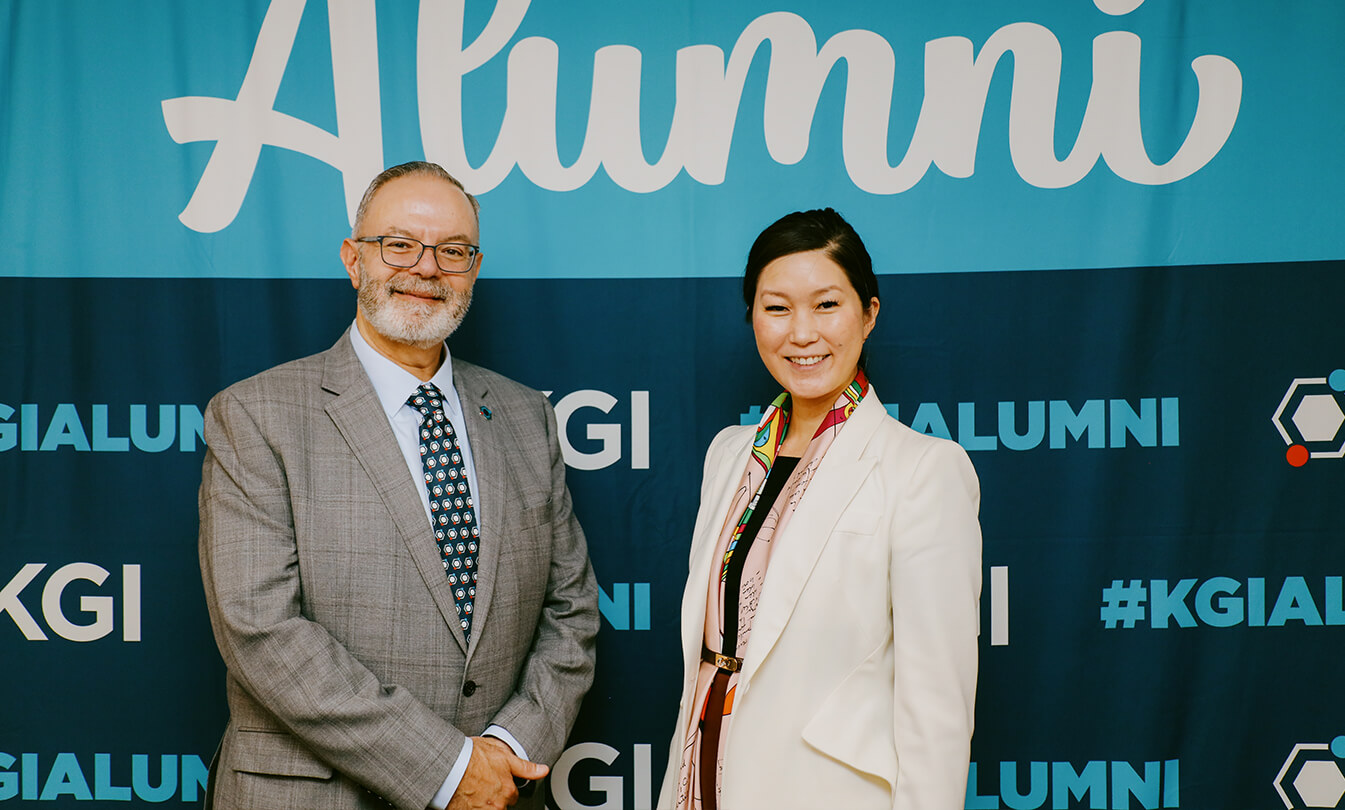
Finding the Right Role
Wong arrived at Keck Graduate Institute (KGI) with a clear interest in healthcare technology but no fixed career plan.
“I knew I wanted to get technology into the hands of patients, but I wasn’t sure what role would get me there,” Wong said.
She initially explored intellectual property but realized it was not the right path. A Gallup StrengthsFinder assessment, combined with what she was learning in KGI’s Master of Business and Science (MBS) program, helped point her toward regulatory affairs.
After an internship at the Alfred Mann Foundation, Wong joined St. Jude Medical, now part of Abbott, through a rotational regulatory affairs development program. The experience gave her a broad foundation in the field and launched a career that would eventually expand into clinical leadership.
Where Innovation Becomes Access
For Wong, career advancement has never been the sole measure of success. What matters most is seeing a technology move beyond research and development and into a patient’s life.
“We sometimes receive letters from patients describing how our products have changed their lives, and those moments really stay with me,” Wong said.
That perspective has shaped her work across Abbott’s neuromodulation portfolio. Spinal cord stimulation is used to help manage chronic pain, while deep brain stimulation (DBS) is used for movement disorders including Parkinson’s and essential tremor. These technologies have also been used internationally for dystonia, a condition characterized by involuntary muscle contractions.
During the pandemic, Wong and her colleagues accelerated work on remote programming, allowing patients to stay connected with physicians without always needing an in-person visit.
A New Frontier for Neuromodulation
Wong’s current work is focused on another area of unmet need: treatment-resistant depression. Abbott is conducting a pivotal study to evaluate its DBS system in people with treatment-resistant depression.
“These are patients who have failed more than four treatments, including multiple classes of drugs,” Wong said.
The study targets an area of the brain associated with mood.
“For people who benefit from the treatment, we hope they can eventually return to activities they weren’t able to do before,” she said, “even things as basic as getting out of bed or running errands.”
The Art of Bringing People Together
Wong traces much of her approach to collaboration back to KGI’s team-based environment.
“The most important thing is to lead with curiosity and put yourself in someone else’s shoes,” Wong said. “You have to understand what other people offer and how all the pieces come together. That’s what creates a collaborative team environment.”
That perspective is especially important in her current role, which involves making strategic decisions about where to invest, how to manage business risk, how to respond to changing global regulations and supply chain disruptions, and how to keep existing products available while advancing new ones.
“You can get something approved and still not launch it because you haven’t figured out how to commercialize it effectively,” Wong said. “You have to think about whether you’re making the best use of resources in order to make a difference for patients.”
She credits Angelika Niemz, now dean of the Henry E. Riggs School of Applied Life Sciences, with encouraging an open-ended approach to solving problems. She also remembers Gail Baura for bringing an industry perspective to questions of patient safety, trade-offs, and regulation.
Most essentially, she learned that making an impact is not just about having good ideas. It requires getting the people around you on board.
“You can’t make an impact by yourself,” Wong said. “You have to bring everyone else along with you.”
A Career That Keeps Expanding
Wong’s influence has been recognized beyond KGI. She was named a Technology Rising Star at the Waves of Change STEM Conference in 2021 and a Rising Star by the Healthcare Businesswomen’s Association in 2025.
These honors reflect a career rooted in technical depth, business judgment, and a persistent focus on the people who ultimately benefit from the work.
Wong arrived at KGI knowing she wanted to bring technology to patients, even if she did not yet know how. Nearly two decades later, that goal still defines her work.
Her path is a testament to the value of finding a role that fits and learning how to bring people and disciplines together. And, at every stage, the destination remains the same: helping promising medical innovation reach the people it was designed to help.